I'm starting by zeroing in on the user's need. They're clearly looking for practical information: what are these insulation layers, how do they work, and most importantly, how do I pick the right one? They want a smart purchase, avoiding cold feet.
To get the ball rolling, I'll structure this guide with a clear flow. First, an attention-grabbing hook answering the main question right away. Then, I'll drop a "core takeaway" box, hammering home the vital balance between warmth and breathability. It's not just about maximum insulation; it's the right insulation for your use case.
Next comes the meat of the content. I'll break it down into digestible chunks. First up: "How Snow Boot Insulation Works." I'll explain the core principle – trapping air to create a thermal barrier – and the essential role of breathability. No one wants sweaty, cold feet! Then, I will briefly mention the location of the insulation in the boot.
"Decoding Insulation Types and Ratings" is the next section. I'll run through the common materials: synthetic, natural, and reflective liners, with a concise explanation of each. Then I'll break down gram ratings. That's a critical point. I'll explain what "g" means and how it relates to warmth. I will include a general guide, acknowledging that temperature specifics can vary based on activity and individual factors.
Finally, I'll tackle the trade-offs: "Warmth vs. Bulk," "Breathability vs. Warmth," and the impact of activity level. It's crucial for the user to understand that more insulation isn't always better. Highly insulated boots can become sweaty and cold if you are active.
For the concluding section, I'll give actionable advice. It will be a bulleted section, recommending appropriate gram ratings based on different needs: casual winter wear, active sports, or extreme cold. I'll finish with an empowering sentence, reinforcing the value of making an informed choice.
I'm pulling together the essential bits from the references. Insulation's core function is trapping heat. It's always placed under the waterproof layer. I'll mention common materials like fleece, wool, and synthetics. I will explain gram ratings and provide general temperature guidelines. It's about regulating temperature and being breathable. The correct selection depends on the context: environment and the level of activity are crucial.
I'm confident I can shape this into a clear, concise guide. I'll pay close attention to the requested format, avoiding direct copying and maintaining an accessible, knowledgeable tone. The final document will be a Markdown file, following the plan precisely. Let's make this useful! At its core, insulation in snow boots is a dedicated layer of material designed to trap your body heat and create a thermal barrier against the cold. It is typically made from synthetic fibers, natural wool, or fleece, and is almost always located underneath the boot's outer waterproof shell to keep it dry and effective.
The purpose of snow boot insulation is not simply to be as thick as possible, but to provide the right balance of warmth and breathability for your specific climate and activity level.
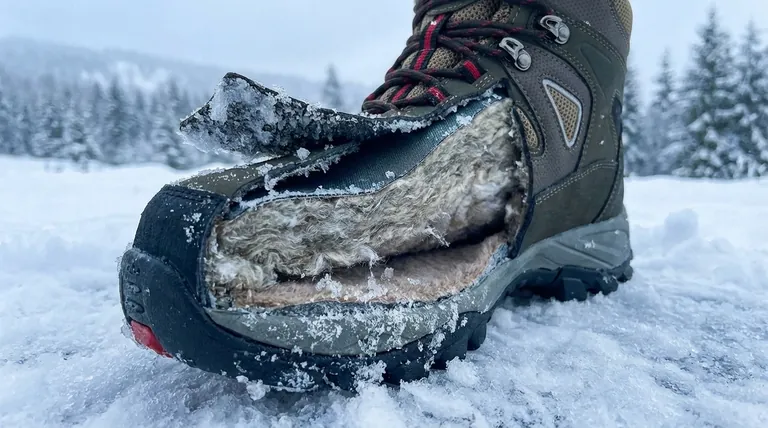
How Snow Boot Insulation Works
To select the right boot, it’s essential to understand the principles behind how insulation functions. It's more than just a layer of padding; it's a technical system.
The Core Principle: Trapping Air
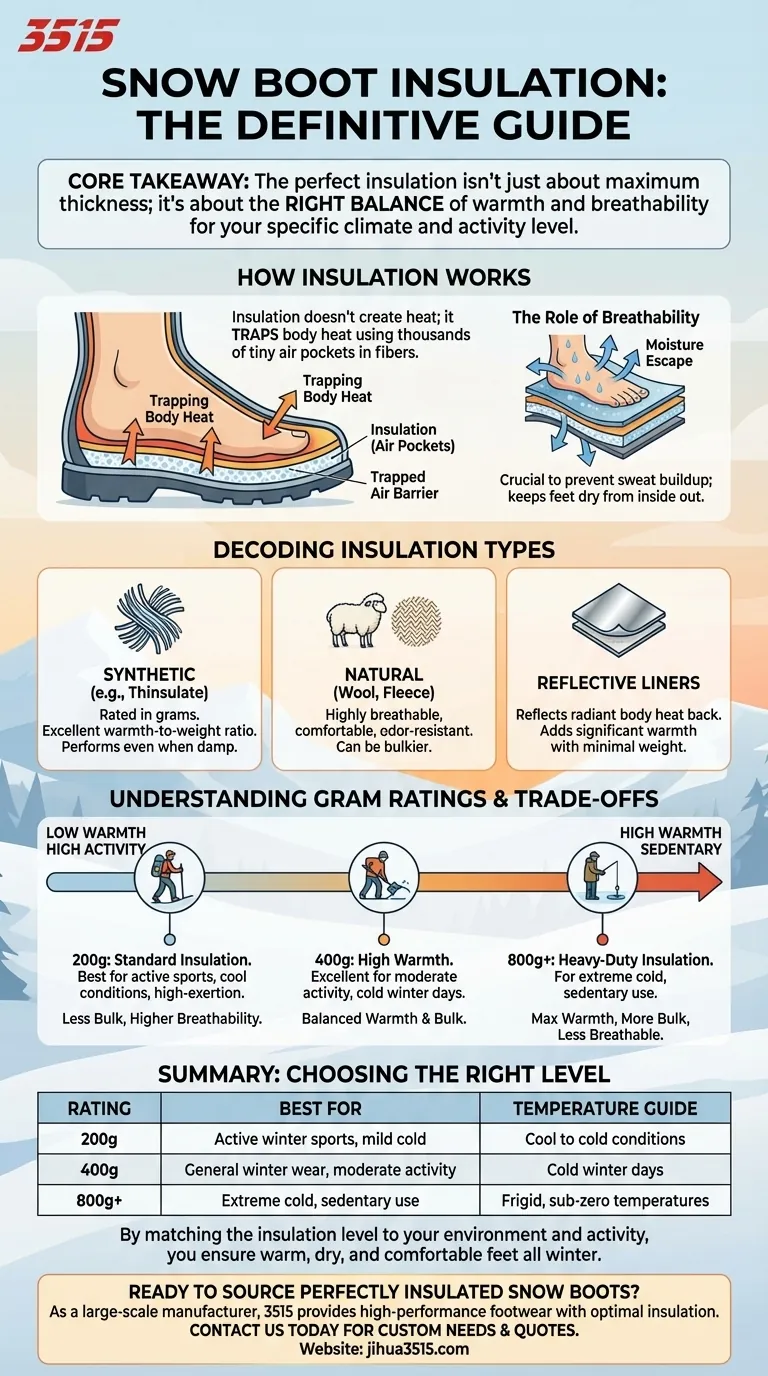
Insulation doesn't create its own heat. Instead, its primary job is to trap the heat your feet naturally generate.
The materials used, whether synthetic like Thinsulate or natural like wool, are composed of fine fibers that create thousands of tiny air pockets. This trapped, "dead" air is an excellent insulator, dramatically slowing the rate at which your body heat escapes into the cold environment.
The Importance of Breathability
A critical, often overlooked, function of quality insulation is breathability. As you move, your feet sweat, even in frigid temperatures.
If this moisture gets trapped, it will make the insulation damp and cause your feet to feel cold very quickly. Effective insulation allows this water vapor to escape, keeping your feet dry from both the outside elements and internal perspiration.
Materials and Their Properties
Boot manufacturers use a variety of materials, each with distinct characteristics.
- Synthetic Insulation: Materials like Thinsulate are the most common. They are rated in grams, offer excellent warmth for their weight, and perform well even when damp.
- Natural Insulation: Wool, shearling, and fleece are classic choices. They are highly breathable, comfortable, and naturally odor-resistant, though they can be bulkier than synthetics.
- Reflective Liners: Some boots include a metallic liner that reflects radiant body heat back toward the foot, adding a significant amount of warmth with very little weight or bulk.
Decoding Insulation Ratings
The most common way to compare the warmth of boots is by looking at the gram weight of their synthetic insulation.
Understanding Gram Ratings
When you see a rating like 200g, 400g, or 800g, it refers to the weight of the insulation material in grams per square meter of fabric. A higher number indicates a thicker, denser layer of insulation.
This rating provides a standardized way to estimate a boot's potential for warmth.
Translating Ratings to Conditions
While temperature ratings are not an exact science and are affected by your activity level and circulation, you can use these gram ratings as a general guide:
- 200g: Considered standard insulation. It is best for cool conditions or high-exertion activities (like winter hiking) where you are generating significant body heat.
- 400g: Provides a high level of warmth. This is an excellent choice for cold winter days with moderate activity levels, such as shoveling snow or walking.
- 800g+: This is heavy-duty insulation. It is designed for extremely cold, frigid temperatures or for sedentary activities like ice fishing or standing for long periods.
Understanding the Trade-offs
Choosing the highest insulation rating is not always the best strategy. You must consider the potential downsides.
Warmth vs. Bulk
Heavier insulation is warmer, but it is also thicker and heavier. An 800g boot will feel much clunkier than a 200g boot, which can be cumbersome for active pursuits.
The Impact of Activity Level
Your level of physical activity is a critical factor. Someone who is snowshoeing or hiking generates a massive amount of body heat and may overheat and sweat in a heavily insulated boot.
Conversely, a person standing still at a winter event needs much more insulation to stay comfortable because their body is not producing as much excess heat.
How to Choose the Right Insulation Level
Use your primary goal to determine the ideal insulation weight for your needs.
- If your primary focus is daily wear in mild winter or active sports: A lower rating of 200g offers a great balance of warmth and flexibility without causing overheating.
- If your primary focus is all-around winter use in consistently cold climates: A 400g rating provides significant warmth for most winter activities and conditions.
- If your primary focus is extreme cold or remaining stationary for long periods: An 800g or higher rating is necessary to retain heat and prevent cold-related injury.
By matching the insulation level to your environment and activity, you empower yourself to make the right choice for warm, dry, and comfortable feet all winter.
Summary Table:
| Insulation Rating | Best For | Temperature Guide |
|---|---|---|
| 200g | Active winter sports, mild cold | Cool to cold conditions |
| 400g | General winter wear, moderate activity | Cold winter days |
| 800g+ | Extreme cold, sedentary use | Frigid, sub-zero temperatures |
Ready to source perfectly insulated snow boots for your market?
As a large-scale manufacturer, 3515 produces a comprehensive range of high-performance footwear for distributors, brand owners, and bulk clients. Our expertise ensures optimal insulation levels for any climate or activity, combining warmth, breathability, and durability.
Contact our team today to discuss your custom snow boot needs and get a competitive quote.
Guía Visual
Productos relacionados
- Botas y Zapatos de Seguridad Premium Aislados para Pedidos Mayoristas y al por Mayor
- Botas de lluvia impermeables duraderas | Fabricante a medida para mayoristas y marcas
- Botas de lluvia al por mayor directo de fábrica Resistentes al agua y totalmente personalizables
- Mayorista Botas Tácticas Resistentes al Agua Gamuza Personalizada y Suelas de Alta Tracción
- Mayorista Botas Tácticas Ligeras Fabricadas a Medida para Uso en Desierto y Combate
La gente también pregunta
- ¿Cuáles son los índices de aislamiento recomendados para condiciones invernales moderadas? Una guía para trabajadores activos y estacionarios
- ¿Cómo se correlaciona el grosor del aislamiento con los rangos de temperatura? Una guía para elegir el abrigo adecuado
- ¿Qué nivel de aislamiento se necesita para el frío extremo y el trabajo estacionario? Es esencial 1200 g o más.
- ¿Qué ventajas de seguridad ofrecen las botas aisladas más allá del calor? Protección Dieléctrica y Agarre Superior
- ¿Cómo contribuye el forro de vellón a la calidez de las botas aisladas? Atrapando aire para una protección superior contra el frío.